Why Local SEO Wins in the Gulf Before Paid Ads Ever Should
A service business in Riyadh or Jeddah doesn't need more traffic — it needs the right three streets. Here's the ranking framework we use before a single riyal goes into ads.
01 The map pack problem
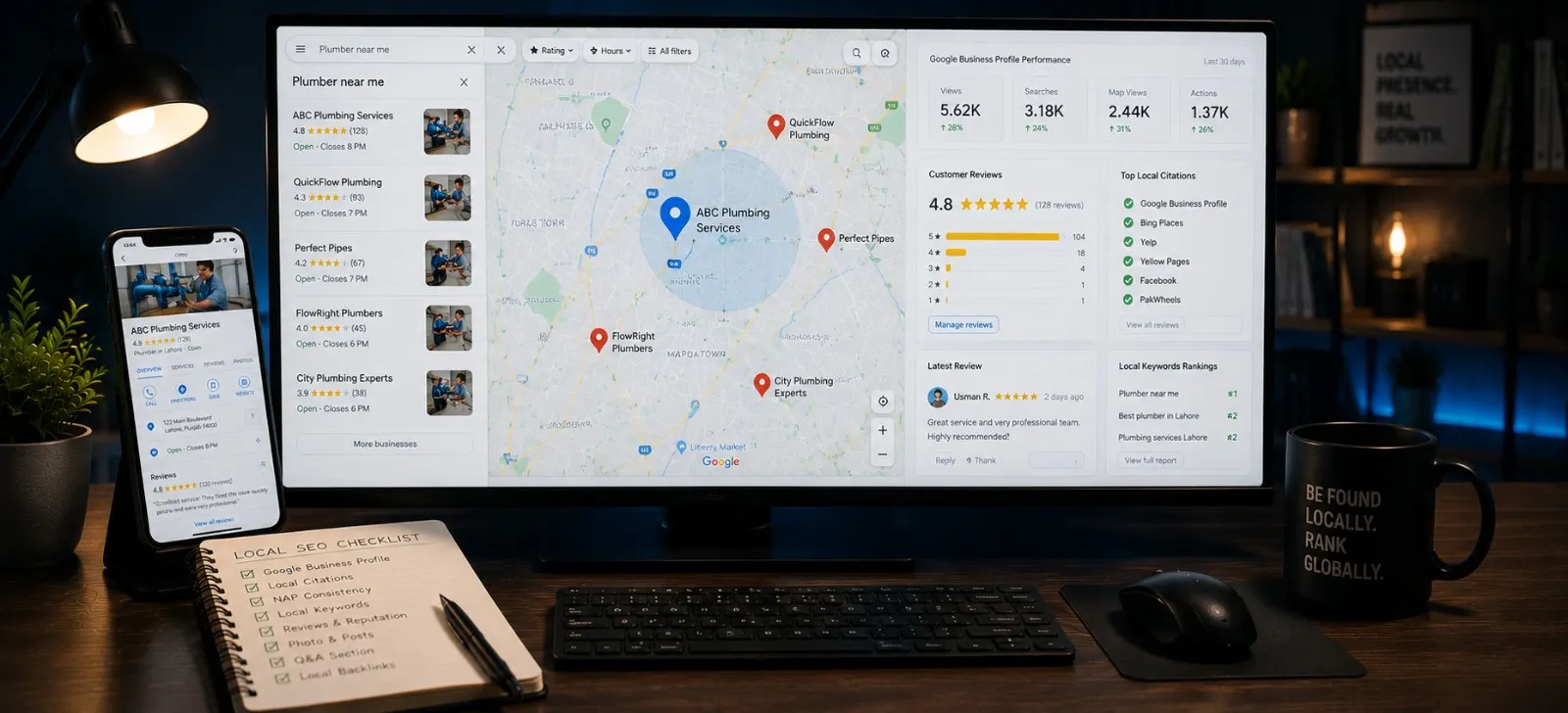
Most appliance-repair and home-service clients we onboard in Riyadh, Jeddah, and Dammam come to us the same way: they've already spent money on Google Ads, and the leads are expensive and inconsistent. The traffic shows up. The bookings don't. Almost every time, the real issue isn't the ad copy — it's that the business doesn't rank in the three-pack for the neighborhoods that actually convert.
The map pack is where local intent lives. Someone searching "washing machine repair near me" at 11pm isn't going to scroll past three ranked competitors to click a paid ad from a business with no reviews and a generic listing.
02 Why paid ads mislead first
Ads generate volume instantly, which makes them feel like progress. But volume without local trust signals converts poorly — and worse, it masks the actual problem. We've seen clients run ads for months while their Google Business Profile sat unverified with three photos and zero recent reviews.
03 The three-street framework
Instead of trying to rank citywide on day one, we pick the three streets or districts where the client actually wants jobs — say, Al Olaya, Al Malaz, and Al Naseem in Riyadh — and build location relevance there first:
- Service-area pages with genuinely different content per district, not a template with the name swapped
- Local citations that match NAP (name, address, phone) exactly across directories
- Review requests timed to completed jobs in those specific districts
- Arabic FAQ content answering the actual questions customers ask in that area
Once those three districts hold steady rankings for two to three months, we expand outward. It's slower than a citywide blast, but it compounds — each new district borrows trust from the ones already ranking.
"Rank three streets properly before you try to rank a whole city. A business with 40 five-star reviews in one district beats one with 5 reviews spread across ten." — Field note from a Jeddah refrigerator-repair client, month 3
04 Where schema fits in
Once the profile and reviews are working, LocalBusiness schema is what helps Google connect the dots between your site and your listing with confidence. The fields that matter most are address, geo coordinates, areaServed, openingHours, and aggregateRating — in that order of impact.
05 A 30-day checklist
If you're starting from zero on a new domain, this is the order we follow — verification and profile completeness first, structural SEO second, content and review velocity last:
- Week 1 — Verify Business Profile, fix categories, complete every field
- Week 2 — Add LocalBusiness + FAQPage schema, fix NAP consistency
- Week 3 — Publish 3 district-specific service pages
- Week 4 — Begin review requests, monitor map pack position weekly
Only after this sequence holds do we recommend switching on Google Ads — at that point, the paid spend is reinforcing a foundation that's already converting organically, instead of covering for one that isn't there yet.